How We Cut Bathroom Remodel Time to 2 Weeks Instead of 4 to 6

A bathroom remodel does not have to take over your house for a month and a half. Many projects stretch to 4 to 6 weeks because the real work begins too late. Materials are ordered after demolition. Permits get handled once the crew is already waiting. A plumber gets squeezed into the schedule when the walls are open. Installers come and go one trade at a time.
We take a different approach.
The 2-week remodel starts before the first tile comes off the wall. By the time demolition begins, the selections are made, the materials are on site or confirmed, the permits are handled, and the people doing the work already know the plan. That preparation is what cuts days, and often weeks, out of the schedule.
Not every bathroom can be completed in exactly 2 weeks. Larger spaces, major layout changes, custom features, inspection delays, or hidden damage can add time. But for many standard bathroom remodels, a 2-week construction schedule is realistic when the project is planned the right way.
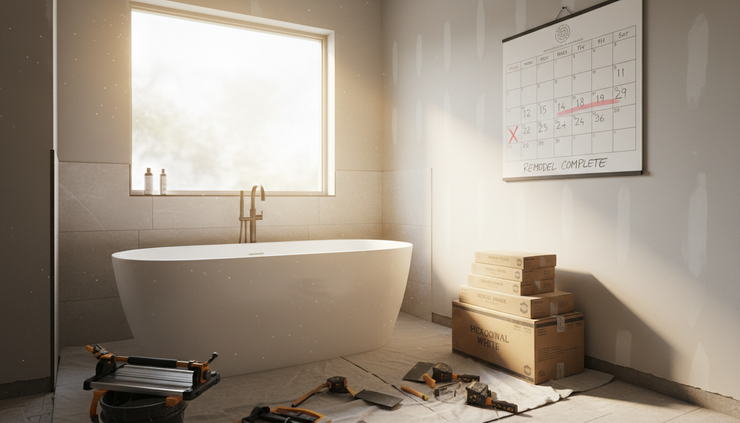
The timeline gets shorter because the waiting gets removed
Most remodel delays do not come from the actual labor. They come from gaps between steps.
A bathroom might only need a day for demolition, but then the crew waits three days for the plumber. Tile may take several days to install, but the whole job stalls if the tile is backordered. A permit might be simple, but if nobody files it until the week work starts, the schedule is already in trouble.
We reduce the timeline by removing those gaps before they appear.
That means we focus on:
Ordering materials before the start date
Completing permits ahead of time
Scheduling inspections early
Using a plumber who knows our bathroom projects in detail
Keeping installers available and ready
Assigning installers who can handle several parts of the job
Checking the site before demolition
Making decisions before the crew arrives
Reducing change orders during construction
The goal is not to rush the work. Rushing creates mistakes. The goal is to make sure each step is ready when the previous step finishes.
A fast bathroom remodel is really a well-planned bathroom remodel.
Materials are ordered before demolition starts
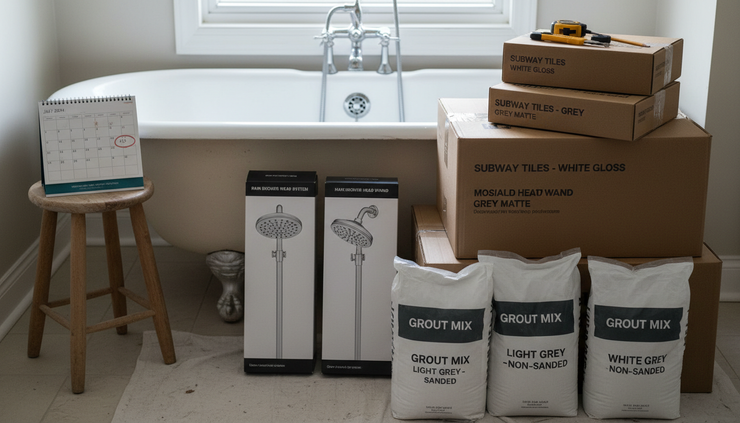
One of the biggest reasons bathroom remodels drag on is material delay.
Tile, vanity cabinets, faucets, shower valves, drains, mirrors, lighting, towel bars, toilets, waterproofing products, trim pieces, grout, and paint all need to be ready at the right time. If one small item is missing, it can hold up several other steps.
For example, a shower valve has to be available during rough plumbing. A niche trim piece may need to be installed before tile wraps that wall. A vanity faucet usually affects countertop or sink planning. Even a missing bag of grout can slow down the final stretch.
We do not want installers standing in the bathroom saying, “We can’t finish this until the part arrives.”
So we order materials ahead and check them before work begins.
That includes more than placing the order. We look for the common problems that cause delays:
Wrong tile quantity
Broken tile in the box
Missing trim pieces
Late plumbing fixtures
Backordered vanities
Incorrect finishes
Missing shower drains
Incomplete hardware sets
Paint colors that have not been selected
This step alone can save a week or more on a remodel. Many contractors lose time because they start too soon, then wait for the bathroom to catch up. We prefer the bathroom to be ready before we touch it.
Permits are handled before the crew arrives
Permits can be another schedule killer.
The exact permit needs depend on the scope of work and local requirements. Many bathroom remodels involve plumbing, electrical, or structural items that may need approval. If the permit process starts after demolition, the job can sit while everyone waits.
We handle permit planning before construction begins.
That means we review the project, identify what needs approval, and get the paperwork moving early. If inspections are required, we build them into the schedule instead of treating them like a surprise.
This matters because bathrooms have several steps that may need to happen in order:
Demolition
Rough plumbing or electrical
Inspection, if required
Wall prep and waterproofing
Tile installation
Fixture installation
Final inspection, if required
When permits and inspections are planned ahead, the job keeps moving. When they are ignored until the last minute, even a small remodel can lose several days.
Good scheduling does not guarantee that every inspection happens exactly when requested, since local departments control their own calendars. Still, early planning gives the project the best chance of staying on track.
We use a plumber who knows our bathrooms
A good plumber is valuable. A good plumber who already understands the way we build bathrooms is even better.
Bathrooms have tight spaces, exact fixture locations, slope requirements, valve depths, drain placement, and waterproofing details that affect the finished result. If a plumber is new to the process, the crew may spend extra time explaining the layout, checking measurements, or correcting small misunderstandings.
We work with a plumber who knows our bathroom remodels in detail.
That helps in several ways:
The plumber understands our preferred rough-in heights
Shower valves get placed with the finished tile depth in mind
Drains line up with the shower base or tile layout
Vanity plumbing is set for the actual cabinet selected
The plumber knows how we sequence the work
Questions get answered quickly
Scheduling is easier because we give that plumber consistent work
That last point matters. Trade availability is one of the biggest reasons remodels stretch out. If a contractor has to call around and hope a plumber can come next week, the whole job can stop.
Because we provide steady bathroom work, we can plan with a plumber who knows our standards and has a reason to keep our projects on the calendar. That relationship helps us avoid the long gaps that often turn a 2-week job into a 5-week job.
Multi-skill installers keep the job moving
A bathroom remodel involves several types of work. Demolition, framing, cement board or wall prep, waterproofing, tile, trim, paint, fixture installation, caulking, and final adjustments all have to happen in a tight space.
On a slow project, each task may wait for a different person.
The tile installer finishes, then everyone waits for the painter. The painter finishes, then they wait for someone to install trim. The trim goes in, then the job waits again for hardware, touch-ups, or caulking.
We reduce that downtime by using installers who can handle many items from start to finish.
A skilled bathroom installer may be able to:
Demo the old bathroom carefully
Prep walls and floors
Install waterproofing systems
Set tile
Grout and caulk
Install trim
Patch and paint
Set accessories
Handle punch list items
This does not mean one person should do licensed plumbing or electrical work when a licensed trade is required. It means the general installation work does not need to be passed from person to person for every small task.
The more handoffs a project has, the more chances there are for delay. Multi-skill installers reduce handoffs. They also understand how each step affects the next one.
A tile installer who also handles trim and paint thinks ahead. They do not leave careless edges for someone else to fix. They know that a clean tile layout, straight cuts, smooth walls, and proper caulk lines all work together.
We make decisions before the remodel starts
Fast remodels do not work well when major decisions are still open.
Every undecided item can create a pause:
Which tile pattern should be used?
Where should the shower niche go?
What grout color is best?
Should the vanity light point up or down?
Which wall gets the accent tile?
What height should the mirror be?
Do the towel bars go on this wall or behind the door?
These choices seem small, but they come up quickly once construction starts. If the installer has to stop and wait for an answer, the schedule loses rhythm.
We try to settle the details before day one.
That includes a review of selections, layout, fixture placement, tile direction, grout color, paint color, and accessory locations. If a choice affects labor or materials, we want it made early.
This also helps avoid change orders. Changes during construction usually cost time because they can affect work that has already been completed. Moving a niche after waterproofing, changing tile after layout begins, or switching fixtures after plumbing rough-in can all add days.
Clear decisions protect the timeline.
We inspect the bathroom before work begins
A bathroom can hide problems behind tile, drywall, subfloor, and old fixtures. No contractor can see everything before demolition, but a careful pre-job inspection can catch many issues early.
Before work begins, we look at:
Existing plumbing locations
Signs of water damage
Floor condition
Wall condition
Ventilation
Electrical needs
Access to shutoff valves
Delivery paths
Parking and work area setup
Protection for nearby rooms
This helps us plan the first days of work more accurately. If we know the toilet flange needs attention, we can prepare. If the floor feels soft, we can talk about possible subfloor repair before the project starts. If the bathroom is on a second floor, we can plan dust protection and material movement.
The goal is to avoid surprise downtime.
Some surprises can still happen. Old bathrooms sometimes reveal rot, outdated plumbing, or framing issues. When that happens, a prepared team can respond faster because the main schedule, materials, and trades are already organized.
We protect the schedule with a clear daily sequence
A 2-week bathroom remodel needs a tight sequence. Each day has a purpose. The crew should know what is happening now, what happens next, and what needs to be ready tomorrow.
A typical 2-week schedule might look something like this:
Stage | What happens |
Before start | Materials arrive, permits are handled, selections are confirmed |
Days 1 to 2 | Demolition, protection, cleanup, rough prep |
Days 2 to 4 | Plumbing and electrical rough-in, framing changes, inspection if needed |
Days 4 to 5 | Wall prep, waterproofing, floor prep |
Days 5 to 8 | Tile installation, shower walls, floor tile, detail cuts |
Days 8 to 9 | Grout, caulk, paint prep, trim work |
Days 9 to 10 | Vanity, toilet, fixtures, mirror, accessories, touch-ups |
Final day | Punch list, cleanup, final checks |
This is only a sample. The exact schedule depends on the bathroom, tile type, inspection rules, drying times, and scope of work.
The point is that the plan has to be built in the right order. Tile cannot start before waterproofing is ready. Paint should not happen before dusty work is done. Final fixtures should not be installed before the walls are finished.
A clear sequence keeps the project from feeling chaotic.
We plan around drying times instead of ignoring them
Bathrooms involve products that need time to set, cure, or dry. Thinset, grout, waterproofing, caulk, primer, paint, and patching materials all have manufacturer instructions.
A fast remodel still has to respect those requirements.
The difference is planning. If waterproofing needs drying time, the schedule should include work that can happen somewhere else while it sets. If floor tile needs to cure before heavy traffic, the crew can work on wall details, prep trim, or stage fixtures.
Bad scheduling treats drying time as dead time. Good scheduling builds around it.
This is where experience matters. A team that remodels bathrooms often knows which steps can overlap safely and which steps cannot. That knowledge keeps the project moving without cutting corners.
Communication stays simple and frequent
Remodels slow down when no one knows what is happening. A missing answer, a missed delivery, or a small misunderstanding can turn into a multi-day delay.
We keep communication simple:
Confirm the schedule before the start date
Review the plan with the homeowner
Confirm where materials are stored
Share what is happening each day
Ask layout questions before they become urgent
Flag hidden issues right away
Keep the punch list visible near the end
This does not need to be complicated. It just needs to be consistent.
When everyone understands the plan, the remodel feels calmer. The homeowner knows what to expect. The crew knows what decisions have been made. The trades know when they are needed.
That is how a bathroom stays on a 2-week path.
Where other remodels lose 2 to 4 extra weeks
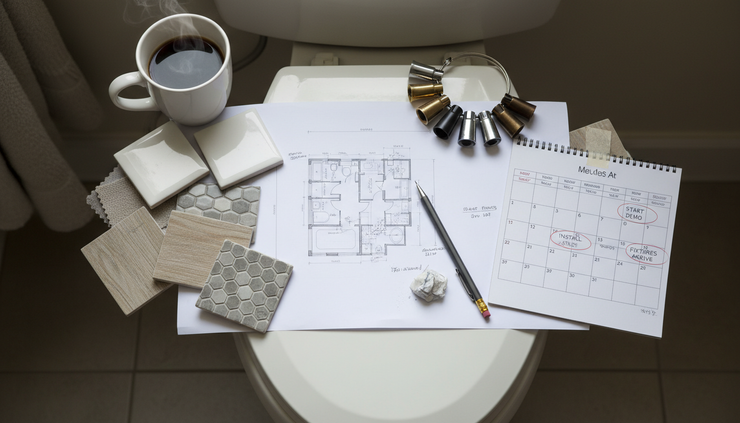
A 4 to 6 week bathroom remodel is not always a sign of bad work. Some projects truly need more time. Custom stone, large-format tile, full layout changes, special-order glass, or major repairs can extend the schedule.
But many long timelines come from avoidable gaps.
Common delays include:
Starting demolition before materials arrive
Waiting on a permit after work has already begun
Calling the plumber too late
Needing separate people for small tasks
Changing selections mid-project
Discovering missing parts during installation
Letting the punch list sit unfinished
Poor communication between trades
Those delays add up. A day here, three days there, a week waiting for a fixture, another week waiting for the next trade. Soon the bathroom has been under construction for more than a month.
Our process is built to prevent that.
What makes a 2-week bathroom remodel realistic
The biggest factor is preparation. The second is coordination. The third is having the right people.
A 2-week remodel becomes realistic when these pieces are in place:
The design is settled
Tile, fixtures, vanity, lighting, paint, accessories, and layout are chosen before the crew starts.
Materials are ready
The products needed for the job are ordered, checked, and available.
Permits are complete
Required approvals are handled early, and inspection timing is part of the plan.
Trades are scheduled
The plumber and other licensed trades know when they are needed and understand the project.
Installers can cover multiple tasks
The crew can move from tile to trim to paint to finishing details without waiting for a new person at every step.
The schedule has daily structure
Each phase has a place on the calendar, with room for required drying and inspection steps.
The homeowner is available for key questions
Even with strong planning, a few decisions may come up. Fast answers keep the work moving.
Faster should still mean careful
Speed only matters if the finished bathroom is built well. A rushed remodel that leaks, cracks, or needs rework is not faster. It is just a problem delayed.
That is why our 2-week approach focuses on planning instead of pressure. We do not skip waterproofing. We do not ignore product instructions. We do not cover up problems that need repair. We do not treat inspections as optional when they are required.
The better way to shorten the schedule is to remove wasted time, not necessary work.
When the materials are ready, the permits are handled, the plumber knows the plan, and the installers can carry the project through several phases, the remodel moves with far fewer stops.
That is how we can take a bathroom remodel that might take others 4 to 6 weeks and complete many projects in about 2 weeks.
The takeaway is simple. A faster bathroom remodel is not built on luck. It is built before demolition day, with planning, prepared materials, reliable trades, skilled installers, and a schedule that leaves little room for waiting.



Comments